Jesus Rose
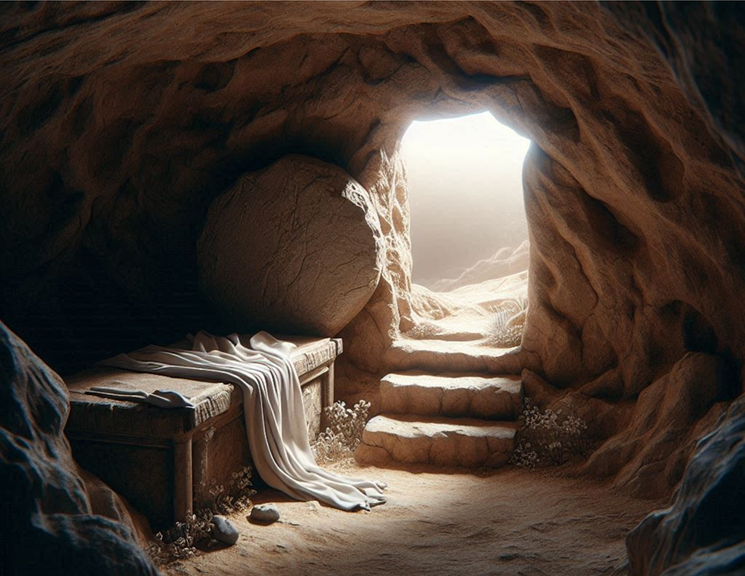
The fact that Jesus rose from the tomb after being crucified is the foundation of the Christian religion. Jesus foretold his death and resurrection (Luke 9:22). His resurrection is the proof that Jesus was who he claimed to be, the Son of God. Without Jesus Christ’s resurrection there is NO Christianity.
To begin with, let us put to rest any notion that Jesus did not die during a Roman crucifixion. The event of Jesus’ crucifixion and subsequent death is undisputed among modern historians, including prominent atheist and agnostic scholars. While I am not presenting the detailed evidence here, the consensus among leading experts emphasizes the reliability of this fact.
Below are statements from several leading agnostic and atheist scholars regarding the death of Jesus:
• Bart D. Ehrman, an agnostic scholar at the University of North Carolina, asserts: “One of the most certain facts of history is that Jesus was crucified on orders of the Roman governor of Judea, Pontius Pilate.”
• Gerd Lüdemann, an atheist New Testament scholar, affirms: “Jesus’ death as a consequence of crucifixion is indisputable.”
• Maurice Casey, an atheist New Testament scholar from the University of Nottingham, confirms: “The fact of Jesus’ crucifixion is one of the most securely established events in his life.” These statements reflect the scholarly agreement that Jesus’ death by crucifixion is a well-established historical event.
Non-believers will not only state that Jesus did not die by crucifixion, but they will also state that “Jesus never rose from the grave, and we have no proof that he did.” I am sorry, there is just too much evidence that disproves that claim. There is a mountain of proof that Jesus did rise from the grave, and I am not going to reinvent the wheel on the subject and cover every proof. However, below are the key points in the evidence that convinces me that Jesus did rise from the grave.
Eyewitness Testimonies: The Foundation of Any Case
The foundation for any legal case is the eyewitnesses. In legal trials, multiple eyewitness accounts strengthen a case. The key witnesses for Jesus’ resurrection are:
• Peter and the twelve disciples saw and interacted with the risen Christ.
• Over 500 people at once saw the risen Christ. Many of these witnesses were still alive at the time of the writing, meaning their testimony could be verified.
• James, Jesus’ skeptical brother, saw his risen brothen and became a believer and church leader.
• Paul, a former persecutor of Christians, saw the risen Christ and then became Christianity’s greatest missionary.
1 Corinthians 15:3-8 talks about many of these eyewitness claims.
For I delivered to you as of first importance what I also received: that Christ died for our sins in accordance with the Scriptures, that he was buried, that he was raised on the third day in accordance with the Scriptures, and that he appeared to Cephas, then to the twelve. Then he appeared to more than five hundred brothers at one time, most of whom are still alive, though some have fallen asleep. Then he appeared to James, then to all the apostles. Last of all, as to one untimely born, he appeared also to me. (1 Corinthians 15:3-8 ESV)
People don’t risk torture and execution for something they know is a lie. Yet, Jesus’ followers who claimed to see the resurrected Christ alive, suddenly became bold preachers willing to die (as most did) rather than deny seeing Jesus alive. Ten of Jesus’ disciples were martyred for proclaiming that Jesus rose from the dead. No one would die of something they knew was a lie.
The Empty Tomb: A Fact No One Disputed
Even Jesus’ enemies never denied the tomb was empty, instead they just tried to explain it away.
• Jewish leaders claimed the disciples stole the body (Matthew 28:11-15).
• Romans and Jewish leaders had every reason to stop Christianity but never produced a body.
• Christianity would have collapsed immediately if there was a body in the tomb to disprove the claims made by those who saw the risen Jesus.
In a trial when both hostile and friendly sources agree on a fact (the tomb was empty in this case), it strengthens the credibility of a claim.
The First Witnesses Were Women: A Mark of Authenticity
Unlike modern times, in first-century Jewish and Roman culture, women’s testimonies were often regarded as unreliable and were generally not accepted as credible sources of evidence, a view reflected in legal writings of that time period and in Roman law codes.
• All four Gospels report that women (Mary Magdalene and others) were the first to see the empty tomb and the risen Jesus (Mark 16:1-8, John 20:11-18).
• If this story were made up, it would have been wiser to list men as opposed to women as the first witnesses for increased credibility.
In a legal trial if a testimony includes culturally inconvenient details (women being the first witness in this case) but is still reported, it suggests authenticity rather than fabrication.
Enemies of Jesus Became His Followers
Two of the biggest skeptics and enemies of Christianity, Saul of Tarsus (later known as Paul) and James, the brother of Jesus, became believers after witnessing the risen Jesus alive.
• James (Jesus’ brother) did not believe in Jesus during His ministry (John 7:5) but became the leader of the Jerusalem church and was later killed for his faith in seeing his risen brother, Jesus.
• Paul (formerly Saul) was a fierce persecutor of Christians, but after encountering Jesus, he became Christianity’s greatest missionary. He endured intense persecution and eventually death regarding his claims that Jesus was risen from the grave (2 Corinthians 11:23-28).
What could cause such a dramatic transformation and martyrdom other than seeing the risen Jesus Christ?
Here are some videos that go into much deeper detail and evidence fo the resurreaction of Jesus.
Five Resurrection Facts That Occurred by 36 A.D.
How to Give Evidence of the Resurrection WITHOUT Using the Bible
The Toughest Objections to the Jesus’ Resurrectione
Follow the Evidence: The Turin Shroud’s Ultimate Confirmation of Jesus of Nazareth’s Divinity