Dinosaur Bones
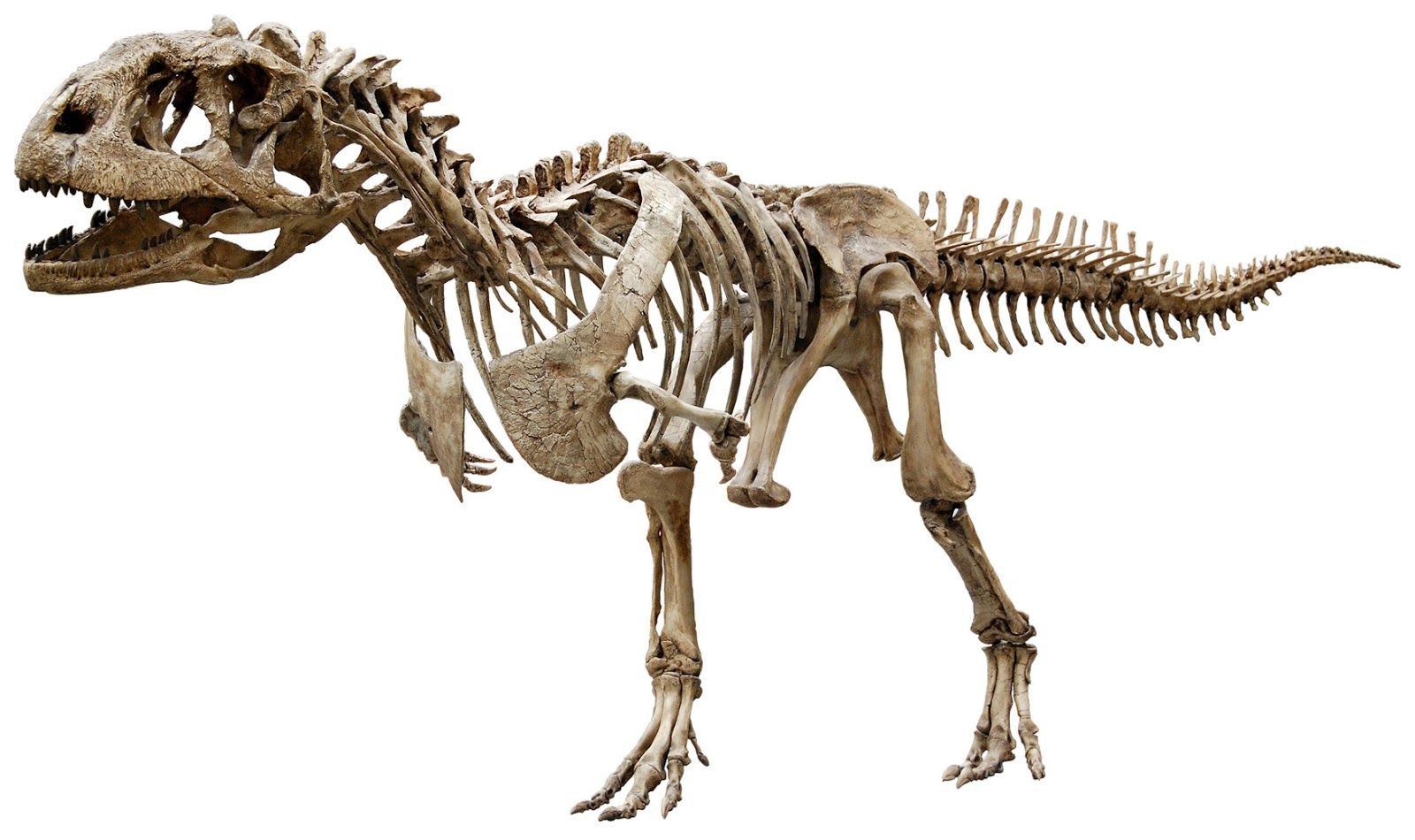
Since childhood we all have been told that dinosaurs lived tens of millions of years ago, long before humans were on the Earth. Textbook after textbook, movie after movie stated this as a fact. Talk about something being driven home, it was that dinosaurs lived tens of millions of years ago. It was so well known that no one even attempted to verify the age of dinosaur bones.
This all changed in 2005, when paleontologist discovered still‑soft tissue, inside a 68‑million‑year‑old Tyrannosaurus rex femur. Of course, they were not looking for soft tissue inside of bone since it was millions of years old. It happened because the T. rex femur broke during excavation and transport, creating an unexpected opportunity to look inside the bone. Of course, for a bone that was millions of years old and completely fossilized, no one expected still-soft tissue to be seen. Under typical conditions it is estimated tissue proteins should not survive beyond 30,000 years. Not 300,000 years, not 3,000,000 years just 30,000 years. Yet this 68,000,000-year-old T. rex bone had still‑soft tissue inside it.
It turns out this was not a fluke. In studies since 2005, 100% of selected dinosaur fossils have yielded soft tissue. So, this is not a one-time freak occurrence. This is a repeatable scientific fact; dinosaur bones have still-soft tissue in them.
So how can fossils that are tens of millions of years old still have soft tissue inside them, that is only expected to last 30,000 years? Maybe the fossils are really not tens of millions of years old. Maybe they are less than 30,000 years old.
Of course, scientists are scrambling to come up with an explanation of how soft tissue can still be in bones that are supposed to be tens of millions of years old. But the fact is that the soft tissue cannot possibly last that long.
• Article from Nature on soft tissue in dinosaur fossils
Fibres and cellular structures preserved in 75-million–year-old dinosaur specimens
“For example, still-soft, flexible material was recovered after demineralization of well-preserved bones from the Late Cretaceous dinosaur Tyrannosaurus, whereas proteinaceous material was found to be preserved in another dinosaur, Brachylophosaurus. Haemoglobin fragments were found in the abdomen of a beautifully preserved Eocene mosquito15, and degraded eumelanin was recovered in the integument of an Eocene turtle.”
“Models proposed to account for such preservation indicate that it should be the exception rather than the rule. In particular, it has long been accepted that protein molecules decay in relatively short periods of time and cannot be preserved for longer than 4 million years.”