Has the Bible been Changed Over the Years?
First off, please read the following article I posted regarding the reliability of the Bible. The Bible is Reliable.
To summarize that article:
“The Old and New Testaments enjoy far greater manuscript attestation in terms of quantity, quality, and time span than any other ancient documents.”
“All the evidence inside and outside the New Testament runs contrary to the claim made by critics that the early church distorted the life and teachings of Christ.”
“While we cannot say that archaeology proves the authority of the Bible, it is fair to say that archaeological evidence has provided external confirmation of hundreds of biblical statements. “
Quite often critics will use the claim that the Bible is a translation of a translation of a translation. This comes from the fact that Jesus spoke in Aramaic, his disciples wrote in Greek (1st translation), then the Greek was translated to Latin (2nd translation) and then the Latin was translated into English (3rd translation.)
Likewise, the Old Testament was translated from Hebrew to Latin to then English.
Now that might be true for the original English Bibles, such as the new King James Bible. However, that is not the case for modern English Bible translations. They are translated from the original Greek or Hebrew with no translation into Latin. Keep in mind that at the time of Jesus and the writings of the New Testament, Greek was the common language of trade, administration, philosophy, and everyday life in the entire Eastern Mediterranean, including Judea. Up to 80% of the people in the Eastern Mediterranean could speak or understand Greek during the time the New Testament was written. That is why it made sense for the authors of the New Testament to use Greek, to reach the widest audience possible.
Therefore, if you can read the original Greek (Koine Greek) and Hebrew, then there is no translation needed at all.
Another often quoted analogy is comparing the Bible to the “telephone game.” In the telephone game, one person starts with a phrase and then whispers it to one other person, who then whispers the phrase to one other person and so on. At the end, the phrase the last person receives is nothing like the original phase.
However, this is a very incorrect analogy for the Bible. First off, the Books of the Bible were not whispered to a single person at a time. They were written down. There were several copies made of each book of the New Testament. Yes, these were handwritten copies that can contain errors. We have over 5,000 Greek manuscripts, about 8,000 Latin manuscripts, and another 1,000 manuscripts in other languages (Syriac, Coptic, etc.) By reviewing and studying these thousands of manuscripts we can see any difference and determine where any errors were made and correct them in the current translations. One can argue that the Bible has become more reliable over time, not less.
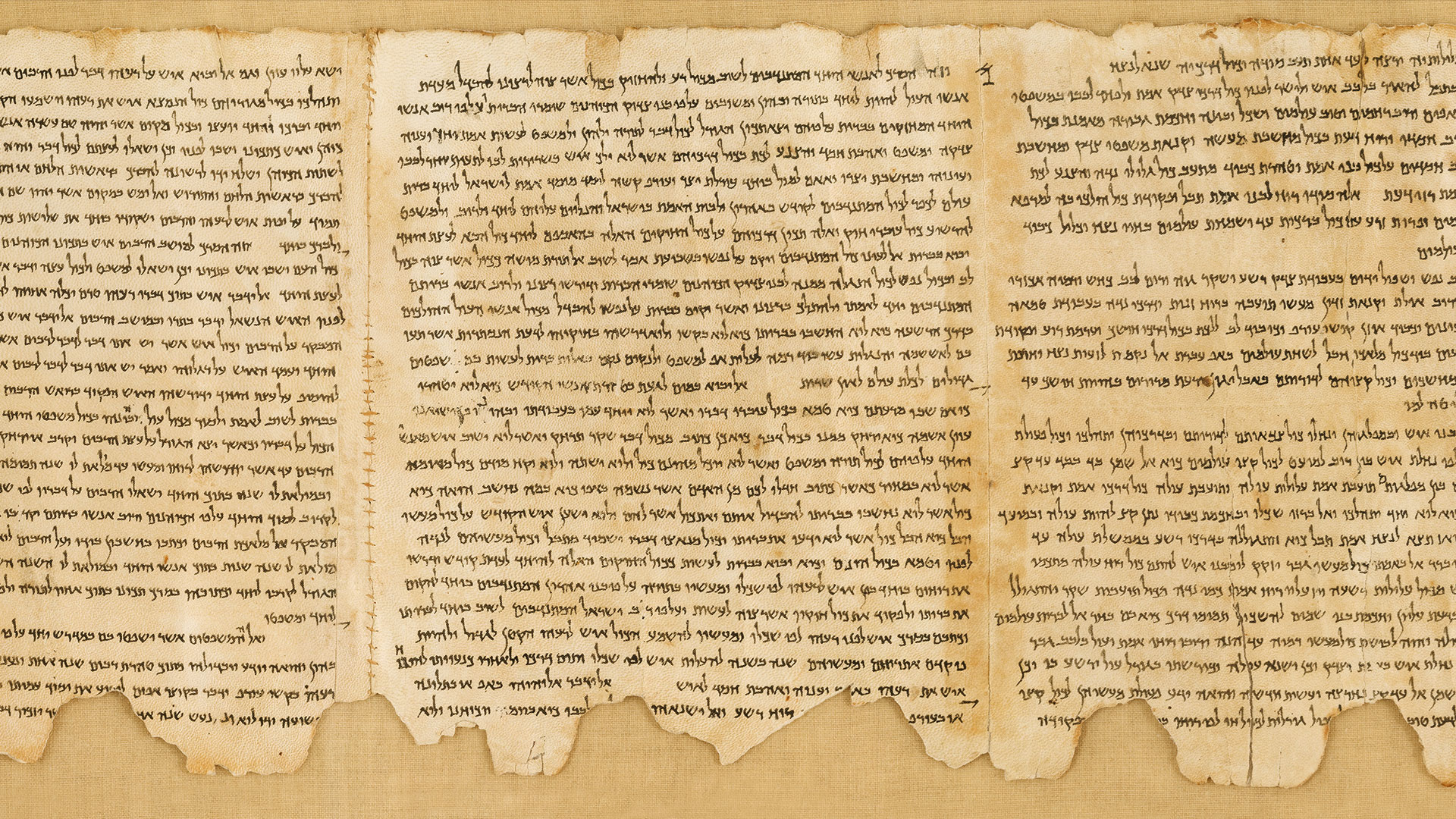
We have the Dead Sea Scrolls which were discovered in 1947 and date back to 150 BC to 70 AD. A comparison between the books of the modern Old Testament Bible and the Dead Sea Scrolls, reveals that aside from variations in spelling and punctuation, the texts remain unchanged with no differences in meaning.
We also have the New Testament as well as most of the Old Testament via:
-
Codex Sinaiticus (ca. 330–360 AD)
-
Codex Vaticanus (ca. 325–350 AD)
-
Codex Alexandrinus (ca. 400–440 AB)
Differences between these codices do exist, however they are, small, well‑documented, non‑doctrinal and expected in ancient hand‑copied texts. Modern New Testament Bibles (ESV, NIV, NASB, CSB, NRSV, etc.) are based primarily on these very same codices. Hence modern New Testament Bibles are essentially the same text from the 4th and 5th centuries AD found in Codex Sinaiticus, Codex Vaticanus, and Codex Alexandrinus.
The bottom line is that core message and teachings of the Old and New Testament are unchanged. The Books of the Bible, both Old and New Testament, have remained unchanged for thousands of years.